
Graphic Design Studio
Introduction to CIM400 Graduate Studio 1
CIM400 Graduate Studio 1 represents a shift in my practice from producing isolated creative outputs to developing work through a structured, industry-aligned process. This unit positions creative practice as something that must be clearly articulated, strategically planned, and critically evaluated, rather than simply executed.
The studio focuses on the development of an original creative media project from concept through to delivery and reflection. Central to this process is the creation of a professional concept proposal, followed by the production of a resolved creative outcome that demonstrates advanced creative media skills and methodological rigour.
Unlike earlier units that emphasised exploration and experimentation, CIM400 requires sustained focus, clear communication of intent, and accountability to timelines, scope, and audience. Ideas are not only formed internally but externalised through proposals, presentations, peer feedback, and mentor guidance.
This unit also places strong emphasis on reflective practice. Evaluating what worked, what did not, and why is treated as an essential professional skill rather than an afterthought. Reflection becomes a tool for improving both the project outcome and my development as a creative practitioner.
By the end of CIM400, my goal is to deliver a resolved creative project that demonstrates conceptual clarity, production competence, and reflective depth. This work will contribute directly to my professional portfolio and support my transition into advanced creative and research-led practice.
AI Use Declaration
ChatGPT was used to assist with spelling, grammar, structural clarity, and alignment with unit documentation. All creative concepts, decisions, and final outputs remain my own.
How to Generate Ideas
This CreativeBloq article talks about ideas as the foundation of good design, and that really stuck with me. It draws on experienced designers to make a simple point: if the idea underneath the work isn’t strong, no amount of visual polish will save it (CreativeBloq, 2019). The work might look nice, but it won’t feel like it means anything.
That idea immediately made sense to me. I’ve had moments where I’ve spent hours tweaking layouts, colours, and type, thinking I just needed to fix the design. But even when everything looked technically right, something still felt off. Looking back, it was usually because I hadn’t fully worked through the idea yet. The article explains this clearly by separating craft from thinking. Craft is important, but it only works when it’s supporting a clear idea, not trying to hide a weak one (CreativeBloq, 2019).
“Strip away the craft, and if there isn’t a compelling thought beneath there’s a risk that even the most beautiful piece of design risks becoming little more than decoration.”
(CreativeBloq, 2019)
One part of the article that really resonated was the focus on simplicity. It talks how a good idea should be easy to explain, even without visuals (CreativeBloq, 2019). I’ve noticed this in my own work too. If I can’t explain what I’m doing in simple terms, especially to someone who isn’t a designer, it usually means I’m still confused myself.
The article also pushes back against the idea that good ideas arrive all at once. Instead, it describes ideation as a messy, ongoing process that includes sketching, discarding ideas, talking things through, and stepping away from the screen (CreativeBloq, 2019). That felt very real to me. My ideas rarely show up fully formed. They tend to come back gradually, sometimes when I’m doing something completely unrelated.
This reading also made me think about responsibility in design. When work sits in more complex or sensitive spaces, having something that just looks good isn’t enough. The article reinforces that without a solid idea, design can easily become shallow or misleading (CreativeBloq, 2019). That reminded me that the idea isn’t a starting step you rush through. It’s the thing that holds the whole project together.
It felt more like this article was giving language to things I already feel in my process. It reminded me that slowing down, sitting with uncertainty, and taking time to really understand what I’m trying to say isn’t wasted effort. When the idea is right, the rest of the design feels calmer, clearer, and more intentional.
References
CreativeBloq. (2019, December 16). How to generate ideas. https://www.creativebloq.com/advice/how-to-generate-ideas
What is a Proof of Concept?
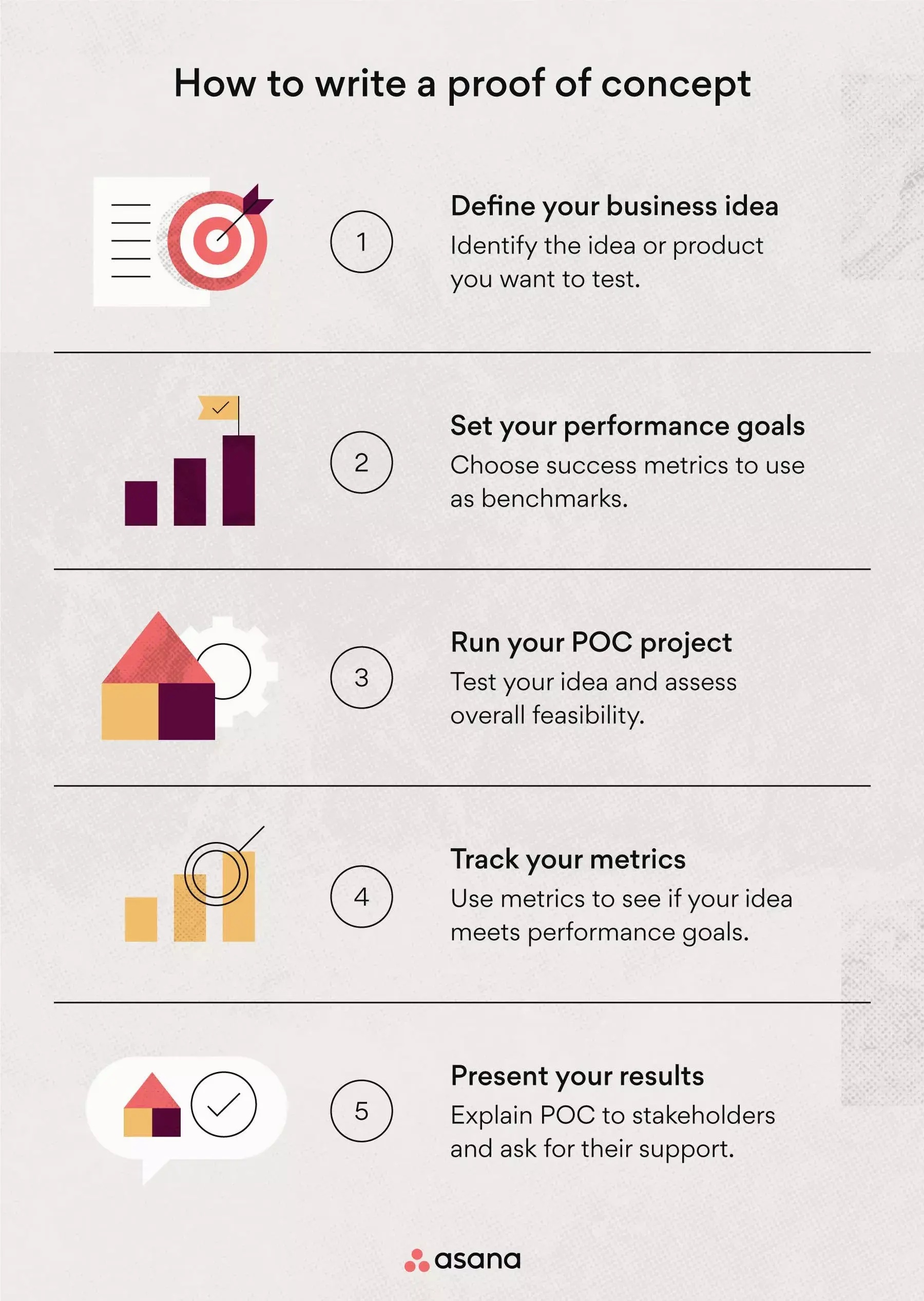
This landed at just the right time. As I step into the early phases of CIM400, where the focus is on concept development and justification, this reading reminded me to pause before launching into execution. I’m someone who likes to jump straight into the design part, but this made me rethink how often I skip the “should we?” stage.
The distinction between a proof of concept (PoC) and a prototype was clearer than I’ve seen it explained before. I’ve definitely blurred the lines. I used to think testing a concept meant showing something polished. But the article shows how a PoC can be stripped back—maybe just a scenario, sketch, or even a conversation. It’s not about finish. It’s about feasibility (Asana, 2025).
One thing that hit me was that a PoC is not there to prove your brilliance. It’s to ask whether the thing deserves to exist at all. It’s an act of restraint. It reminded me that leadership isn’t about having all the answers—it’s about asking the right questions early, before the team runs too far in the wrong direction.
For me, this was a mindset shift. It gave me permission to test lightly, to slow down, and to gather real evidence before building things out. That’s not hesitation—it’s thoughtful, respectful practice. And it means when I do design something, I can back it with a lot more clarity and confidence.
References
Asana. (2025, June 9). What is a proof of concept?
https://asana.com/resources/proof-of-concept
Taika Waititi: TEDx Talk
Taika Waititi’s TEDx talk felt like a creative manifesto disguised as a stand‑up routine. From the opening, he sets expectations against conventional talks by admitting “I kind of don’t really know who I am myself” (Waititi, 2010, 00:38), which immediately reframes credibility not as certainty, but curiosity.
A clear theme throughout is the value of play and generative creativity. He says, “All I’ve got guys is creativity — that’s it… I use filmmaking right now” but emphasises it as a tool rather than a definition of himself (Waititi, 2010, 04:47–05:02). That aligns with creative practice in CIM400: we aren’t here to master one technique, but to explore how ideas can be expressed across forms.
Waititi’s reflections on obsession and how creativity emerges from play are grounded in precise examples. He talks about drawing the Sistine Chapel repeatedly as a kid and being “obsessed with stuff” (Waititi, 2010, 10:45). That ties to the messy reality of creative process — it’s not discipline alone, it’s engagement with what fascinates you, even if it feels weird or unproductive at the time.
Another point he makes is that failure and “bad experience” are fuel. He says that engaging with things that aren’t perfect — watching bad movies, reading bad books — “sometimes it teaches you what not to do” (Waititi, 2010, 16:26). As a creative, that reframes failure not as waste but as data that informs future decisions.
He even reframes success itself: “Success is not money… if that’s your idea of success then that’s great, but I think we’re here to communicate and to share ideas” (Waititi, 2010, 17:20). What’s valuable isn’t prestige or polish — it’s the act of expression. That idea challenges the perfectionism that easily creeps into design work.
Overall, this talk convinced me that authentic creative expression comes less from mastery and more from embracing your own perspective — even the parts that feel uncertain, awkward, or unfinished. Waititi’s humour, self‑deprecation, and non‑linear storytelling didn’t just entertain — they modelled a mindset that I want to bring into CIM400: stay playful, stay curious, and treat process as meaning, not something to hide.
References
Waititi, T. (2010). Taika Waititi: The art of creativity | TEDxDoha [Video]. YouTube. https://www.youtube.com/watch?v=pL71KhNmnls
Ways to Generate New Ideas
The Canva article “13 Ways to Generate New Ideas” is straightforward and practical. It doesn’t treat creativity as something mysterious. It treats it as something you can actively work on. If you’re stuck, don’t wait for inspiration. Use structure. Brainstorm. Mind map. Reverse your assumptions. Introduce randomness. Create movement (Canva, 2025).
This article is really about creative block. It assumes you’ve hit a wall. Nothing feels clear. Direction hasn’t landed yet. The techniques exist to disrupt that stagnation and widen your thinking until something begins to emerge.
I like that it removes the drama from creativity. It doesn’t romanticise the process. It suggests that ideas don’t appear fully formed — they often show up after you’ve generated enough noise for patterns to surface. That reframes creativity as volume and experimentation rather than waiting for a perfect thought.
At the same time, the methods are simple. They’re not theoretical. They’re tools. And that’s the strength of the article. It makes starting feel possible.
The biggest takeaway for me is that creative block isn’t necessarily a lack of talent. It’s often a lack of movement. The solution isn’t pressure. It’s expansion.
References
Canva. (2025). 13 ways to generate new ideas.
https://www.canva.com/learn/13-ways-generate-new-ideas/
How to Write the Perfect Brief
The Creative Commission article How to Write the Perfect Brief reframes the brief as more than a formality. It argues that the quality of a creative outcome is directly shaped by the clarity of the brief itself (Creative Commission, n.d.). A strong brief doesn’t just describe what is needed — it sets direction, aligns expectations, and reduces confusion before production begins.
One of the key points the article emphasises is clarity over length. It recommends briefs that are punchy, visual, and focused rather than overloaded with unnecessary detail (Creative Commission, n.d.). Instead of overwhelming creatives, it suggests including essential components such as context, objective, scope, timeline, and budget. The goal is not to restrict creativity but to create shared understanding from the outset.
The advice to include visual references rather than long written explanations is also central to the article’s guidance (Creative Commission, n.d.). Tone and aesthetic can easily be misinterpreted through text alone. By using imagery or examples, commissioners reduce ambiguity and increase alignment early in the process.
The article also highlights how vague briefs contribute to project drift and unnecessary revisions (Creative Commission, n.d.). When expectations are unclear, assumptions fill the gaps. Clear deliverables and defined boundaries prevent that cycle and create more efficient collaboration.
What struck me most is how often briefs are treated as admin rather than strategy. I’ve seen projects derail not because the creative work was weak, but because the brief was unclear. Assumptions crept in. Scope shifted. Expectations weren’t aligned. Reading this made me realise how much of that is preventable. It also challenged my tendency to over-explain. There’s a difference between clarity and volume. A long brief doesn’t guarantee alignment. In fact, it can dilute it. The article’s emphasis on being punchy and visual forced me to reconsider how I communicate direction.
More than anything, this reframed the brief as the first act of design. It’s not separate from the creative process. It shapes it.
References
Creative Commission. (n.d.). How to write the perfect brief.
https://creative-commission.com/news/how-write-perfect-brief
What Makes a Good Song?
This week I read Duncan’s (2020) article on what makes a good song, and I found myself asking a simple question: why do some songs stay with us, while others disappear the moment they end?
The article suggests that emotional connection is the foundation. A good song makes you feel something. It might make you want to move, or cry, or remember something you had forgotten. That makes sense. But it also made me wonder — is emotion enough? Or is it the way emotion is structured that makes it powerful?
Duncan (2020) talks about memorability. Hooks. Repetition. Melodies that linger. That part really stood out to me. We often think creativity is spontaneous, almost accidental. But here, memorability is described as intentional. It’s designed. Crafted. Placed carefully so it stays in the listener’s mind.
That shifts how I think about creative work more broadly. A song might feel effortless, but underneath that feeling is structure. Verses, choruses, contrast. Movement. The article explains that these elements guide the listener through an emotional arc (Duncan, 2020). Without that arc, the emotion might exist — but it doesn’t travel.
I found myself reflecting on my own creative process. Sometimes I rely heavily on instinct. I ask, does this feel right? But this reading gently challenged me. Feeling is important, yes. But how am I shaping that feeling? Where is the hook? Where is the shift? Where is the moment that lingers?
What I appreciated most is that the article doesn’t reduce songwriting to formula. It simply highlights that craft supports emotion. Technique doesn’t replace authenticity — it strengthens it.
And maybe that’s the real takeaway for me. Creativity isn’t just expression. It’s architecture. The invisible structure that allows emotion to land.
References
- Duncan, L. (2020). What makes a good song? A songwriter’s guide. Music Industry How To. https://www.musicindustryhowto.com/what-makes-a-good-song/
Idea Generation and Creative Flow
This week’s reading on idea generation in video production made me pause and ask a simple question: where do my ideas actually come from? The article reframes creativity not as a lightning strike moment, but as something that can be intentionally nurtured through process and structure (Simply Thrilled, 2023, para. 2).
It explains that idea development begins with research and immersion. Instead of waiting for inspiration, creatives are encouraged to explore references, study similar works, and gather stimuli that expand perspective (Simply Thrilled, 2023, para. 3). This challenged my quiet assumption that “real” creativity should feel spontaneous.
The article also emphasises brainstorming and structured experimentation as practical tools for generating options rather than perfect outcomes (Simply Thrilled, 2023, para. 4). That distinction felt important. Generating is different from refining. I often collapse those two stages into one.
Collaboration is framed as another powerful mechanism for expanding creative possibility. When multiple perspectives enter the room, ideas evolve in directions that would not have emerged individually (Simply Thrilled, 2023, para. 6). This reminded me that creativity is not always solitary. It can be relational.
What resonated most deeply for me was the reminder that creative blocks are not failures. They are signals that the process needs adjusting — perhaps more input, more rest, or a shift in perspective. Instead of interpreting stuckness as inadequacy, the article reframes it as part of the cycle (Simply Thrilled, 2023, para. 8).
Reading this through the lens of my own practice, I began asking gentler questions. Am I giving ideas enough space before judging them? Am I seeking enough stimulus before expecting originality? Am I collaborating early enough, or waiting until something feels polished?
The article did not offer revolutionary theory. What it offered was something quieter: permission to see creativity as iterative and supported rather than mystical and rare. That reframing feels profoundly stabilising.
References
Simply Thrilled. (2023). Idea generation in video production. https://www.simply-thrilled.com/post/idea-generation-in-video-production
Refining Ideas and Finding the Core
Tim Ruswick’s video on refining a game idea reframed creativity for me. Instead of focusing on generating something entirely new, he emphasises refinement — shaping, cutting, testing, and clarifying what already exists (Ruswick, 2023, 0:31–1:06).
The idea of beginning with a “brain dump” stood out immediately (Ruswick, 2023, 0:37–1:08). Writing everything down to free mental space feels deceptively simple. I often hold ideas internally too long. What if clarity begins with release?
Allowing ideas to sit and evolve over time felt particularly powerful (Ruswick, 2023, 3:09–3:42). Creativity is not always urgency. Sometimes it is incubation.
Sharing ideas with others — and paying attention to their reactions — reframes feedback as refinement rather than criticism (Ruswick, 2023, 5:17–6:10). That shift feels important.
Trimming unnecessary elements (Ruswick, 2023, 8:49–9:36) and identifying the core objective (Ruswick, 2023, 10:42–11:15) highlighted something simple yet profound: if the core is unclear, the structure will wobble.
This video reminded me that refinement is not about reduction alone. It is about protection — cutting what distracts and strengthening what matters.
References
Ruswick, T. (2023). How to refine your game idea until it's AWESOME! [Video]. YouTube. https://www.youtube.com/watch?v=REYAjJtzkFQ
When Ideas Have Sex
Matt Ridley’s talk is built around a simple but powerful idea: progress happens when ideas connect and combine (Ridley, 2010, 03:47–04:51). He uses the phrase “ideas have sex” to describe this process. What he means is not random creativity. He means exchange. When people share knowledge, trade skills, and build on each other’s thinking, new things become possible.
He compares a half-million-year-old stone hand axe with a modern computer mouse (Ridley, 2010, 01:36–02:56). The stone tool barely changed for thousands of generations. The mouse becomes outdated within years. Why? Because the mouse is not one idea. It is many ideas layered together — plastic, circuitry, software, design, global supply chains. It is cumulative.
Cumulative innovation means that ideas do not start from zero each time. They build on what already exists. That concept feels obvious when explained, but it changes how I think about creativity. We often treat originality as something individual. Ridley reframes it as something collective.
He also introduces the idea of the “collective brain.” No single person knows how to make a computer mouse from scratch (Ridley, 2010, 13:16–13:53). Each person understands a small part. Together, through exchange and specialisation, something complex becomes possible. That is how societies advance.
I found his example of Tasmania particularly clear. When a community became isolated and exchange stopped, technology did not just slow down — it regressed (Ridley, 2010, 12:13–13:16). That example makes the argument practical. Innovation depends on connection. When ideas stop moving, progress stops.
Reading this, I started asking myself simple questions. Do I see my work as individual expression, or as part of a larger exchange? Am I actively exposing my ideas to other perspectives so they can improve? Or am I keeping them contained?
This talk makes creativity feel less mysterious. It is not about waiting for brilliance. It is about participating in networks of exchange. It is about allowing ideas to meet, mix, and evolve.
That feels grounding. It takes pressure off the individual and places responsibility on connection.
References
Ridley, M. (2010). When ideas have sex [Video]. TED Conferences. https://www.ted.com/talks/matt_ridley_when_ideas_have_sex
What Is Creativity?
This video explores a simple but important question: what is creativity, and how do we come up with new ideas? Brad Batesole frames creativity not as talent, but as a process (Batesole, n.d., 00:54–01:32). That distinction matters. If creativity is a process, then it can be practiced and improved.
He refers to Graham Wallas’ four stages of creativity: preparation, incubation, illumination, and verification (Batesole, n.d., 01:20–01:54). Preparation is the stage where you actively engage with the problem. You research. You read. You ask questions. You gather input. It is focused effort.
Incubation is different. It is when nothing appears to be happening (Batesole, n.d., 01:31–01:54). The idea sits quietly in the background. This stage requires patience. It also requires distraction. He suggests walking away, changing environments, or even switching to another task (Batesole, n.d., 02:38–03:15). That felt reassuring. Often when I step away from something, I worry I am procrastinating. But incubation is not avoidance. It is mental processing.
Illumination is the moment we all like. The “aha” moment (Batesole, n.d., 01:44–01:54). But what stood out to me is that you cannot force it. Trying to will yourself into insight rarely works (Batesole, n.d., 03:18–03:45). That explains why pressure often blocks creativity.
The final stage is verification. This part is less glamorous but arguably more important (Batesole, n.d., 01:48–01:54). Not every idea is good simply because it feels exciting. It needs to be tested, measured, and understood. How will it work? What are the implications? How will success be defined?
What I appreciate about this framework is how practical it is. Creativity is not magic. It is structured attention followed by rest, followed by insight, followed by evaluation.
Reading this made me reflect on my own habits. Do I allow proper preparation before expecting clarity? Do I give myself incubation time without guilt? And do I properly verify ideas, or do I fall in love with them too quickly?
The idea that creativity can be intentionally supported feels steady. It removes the myth that ideas appear out of nowhere. Instead, they are cultivated.
References
Batesole, B. (n.d.). What is creativity and how do you come up with new ideas? [Video transcript].
Action Research in Creative Practice
This week I investigated Action Research and began asking a simple question: what actually makes research useful in creative practice?
Kemmis, McTaggart, and Nixon (2014) describe Action Research as a “practice-changing practice” (p. 2). That phrase stayed with me. It suggests that research is not something separate from doing. It is embedded inside practice itself. They also explain that it follows a disciplined cycle of planning, acting, observing, and reflecting (p. 18). It is not random experimentation. It is structured inquiry.
What I find helpful is the emphasis on participation and reflection. Action Research is not about testing an idea in isolation. It involves others. It asks: what changed? What did we learn? What needs adjusting? It treats development as something that evolves through evidence rather than assumption.
In my own creative work, I often iterate instinctively. I test. I adjust. I rethink. But I do not always formally document that process. Action Research gives language and structure to something I already value. Instead of refining ideas privately and hoping they are strong, I can build cycles into my creative process plan. Prototype. Share. Observe responses. Reflect. Refine.
It also reframes failure. If something does not work, it is not collapse. It is data. It becomes part of the cycle.
What feels most important is the ethical dimension. Kemmis et al. (2014) position Action Research as a way to transform practices that may be irrational, unsustainable, or unjust. That matters in creative industries. Creative ideas are not neutral. They shape experiences. If I am building something for others, then refinement must include their voices.
For my process plan, I will explicitly map Action Research cycles. Each stage of development will include a small test, documented reflection, and a defined adjustment. That way, refinement becomes intentional and accountable rather than intuitive alone.
Action Research does not replace creativity. It supports it. It ensures that ideas are not just interesting, but responsive.
References
Kemmis, S., McTaggart, R., & Nixon, R. (2014). The action research planner: Doing critical participatory action research. Springer.